Research
Our lab develops scalable platforms for quantum sensing and precision metrology spanning solid-state spin defects, quantum materials, computational sensing, and nuclear metrology. We combine optical microscopy, multiplexed control and readout, microwave and radio-frequency techniques, quantum control, and data-driven methods to probe fields, correlated noise, materials and devices, and nuclear-state dynamics. Our goal is to connect nanoscale sensitivity with scalable measurement, computation, and control.
Research Directions
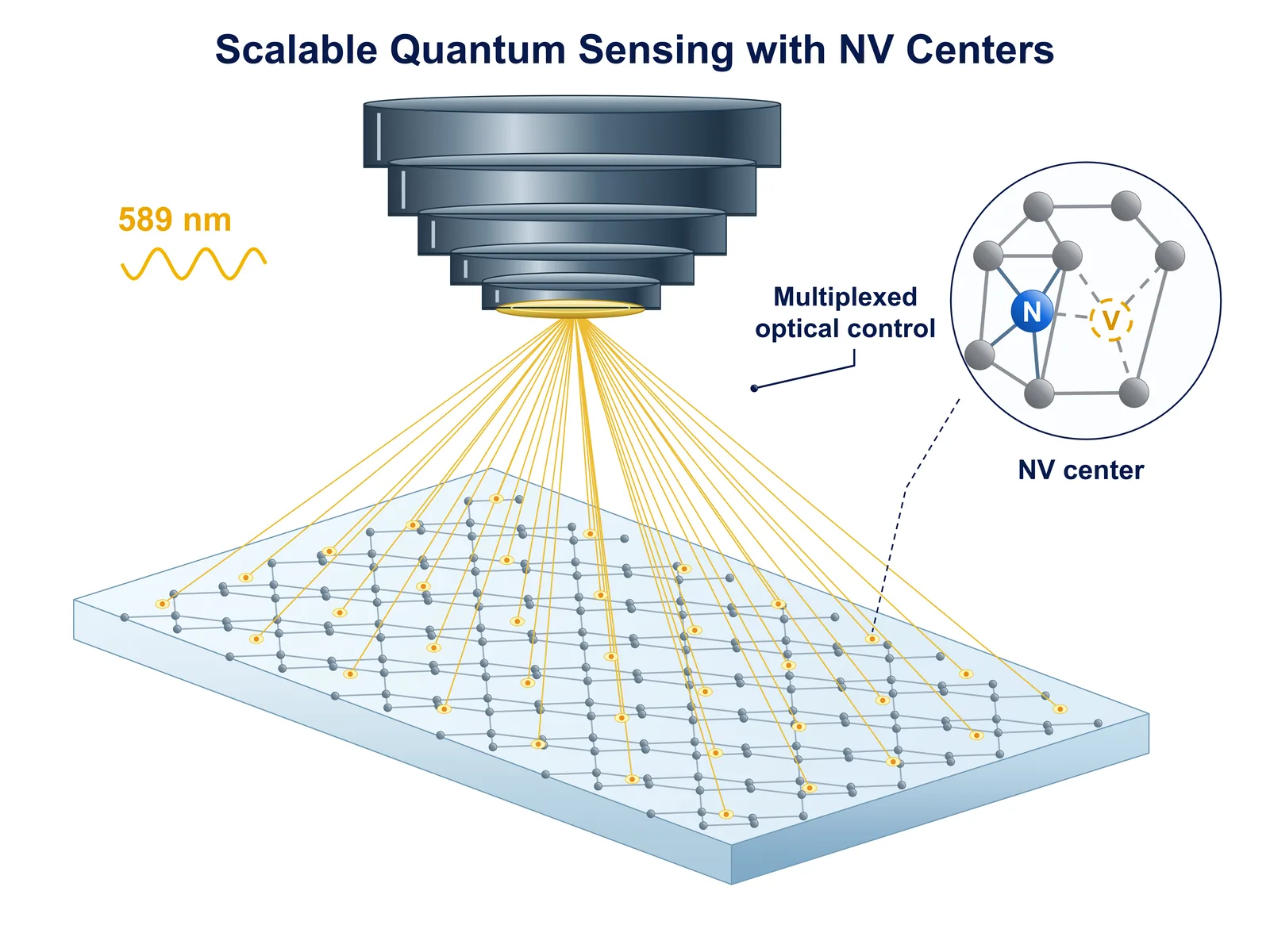
Scalable Multiplexed Quantum Sensing with NV Centers
We develop multiplexed quantum sensing platforms based on nitrogen-vacancy centers in diamond and related solid-state spin defects. Our goal is to move beyond single-sensor measurements toward large arrays of individually resolved quantum sensors. By combining spatial light modulation, optical addressing, microwave control, spin readout, and parallel data acquisition, we aim to measure many NV centers simultaneously for high-throughput nanoscale sensing of magnetic fields, spin dynamics, currents, and noise.
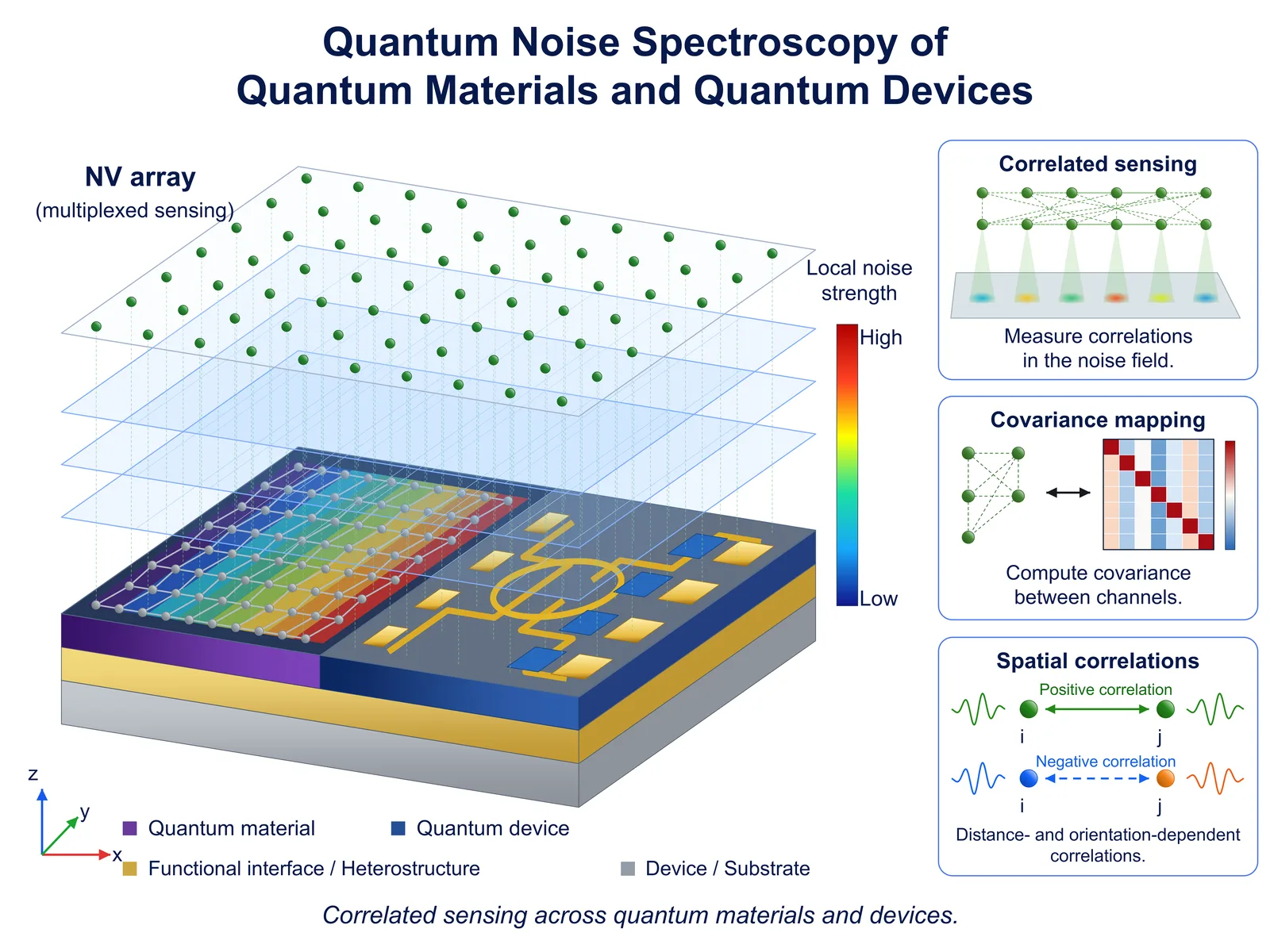
Correlated Quantum Noise Spectroscopy of Materials and Devices
We use NV arrays and spin-defect sensors to probe magnetic noise, spin fluctuations, and correlated dynamics in quantum materials and devices. By measuring signals across many spatially separated sensors, we can access local fields as well as pairwise correlations and covariance signals. These measurements can reveal collective excitations, domain dynamics, current flow, and critical behavior in van der Waals magnets, correlated materials, superconductors, and two-dimensional platforms.
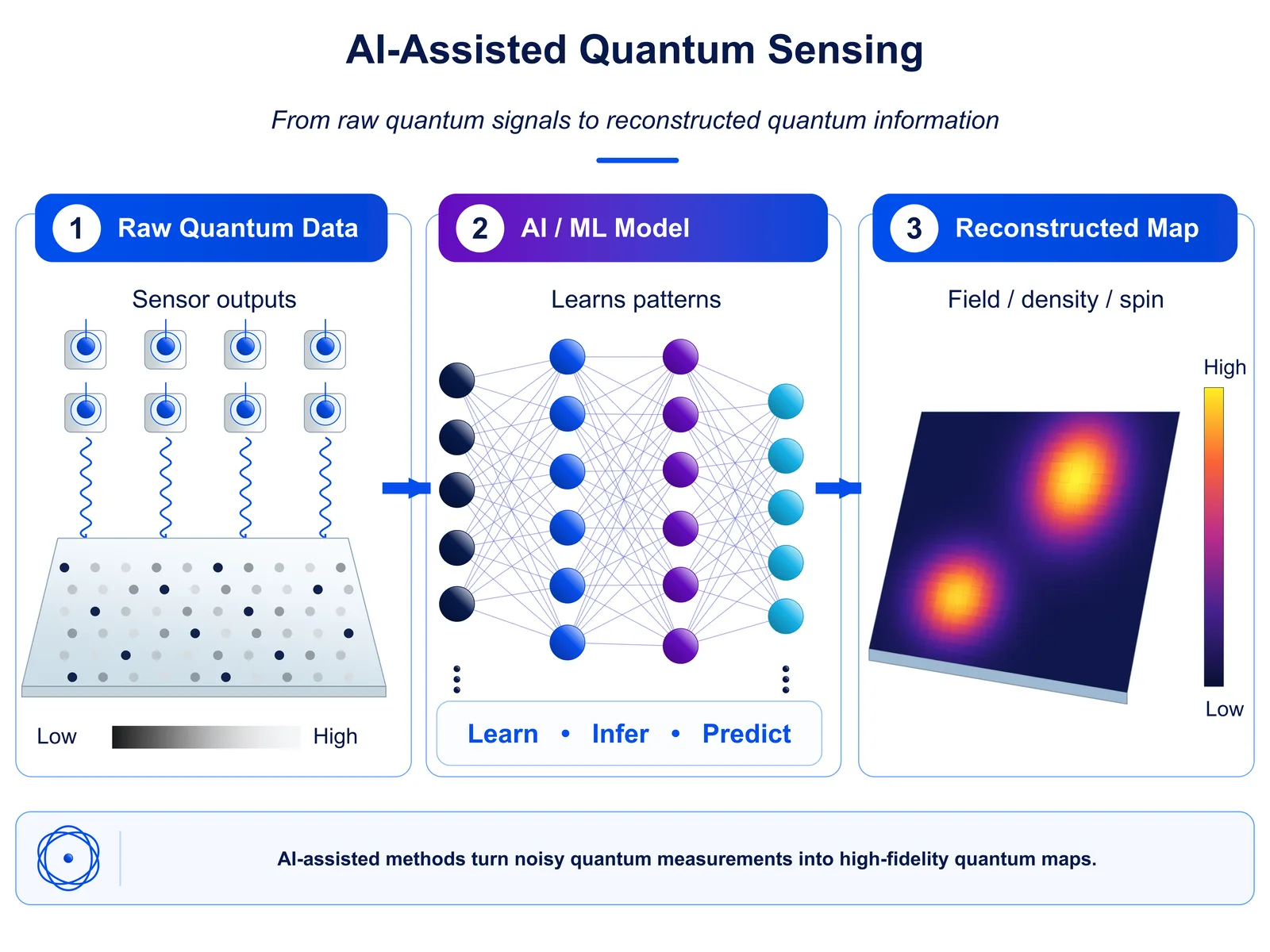
AI-Assisted Quantum Sensing
Multiplexed quantum experiments generate high-dimensional datasets across many sensors, control sequences, and experimental conditions. We develop data-driven methods for denoising, reconstruction, feature extraction, anomaly detection, and adaptive measurement, with the goal of improving information recovery and experimental efficiency. The lab plans to leverage computing resources available through the University at Buffalo Institute for Artificial Intelligence and Data Science and Empire AI.
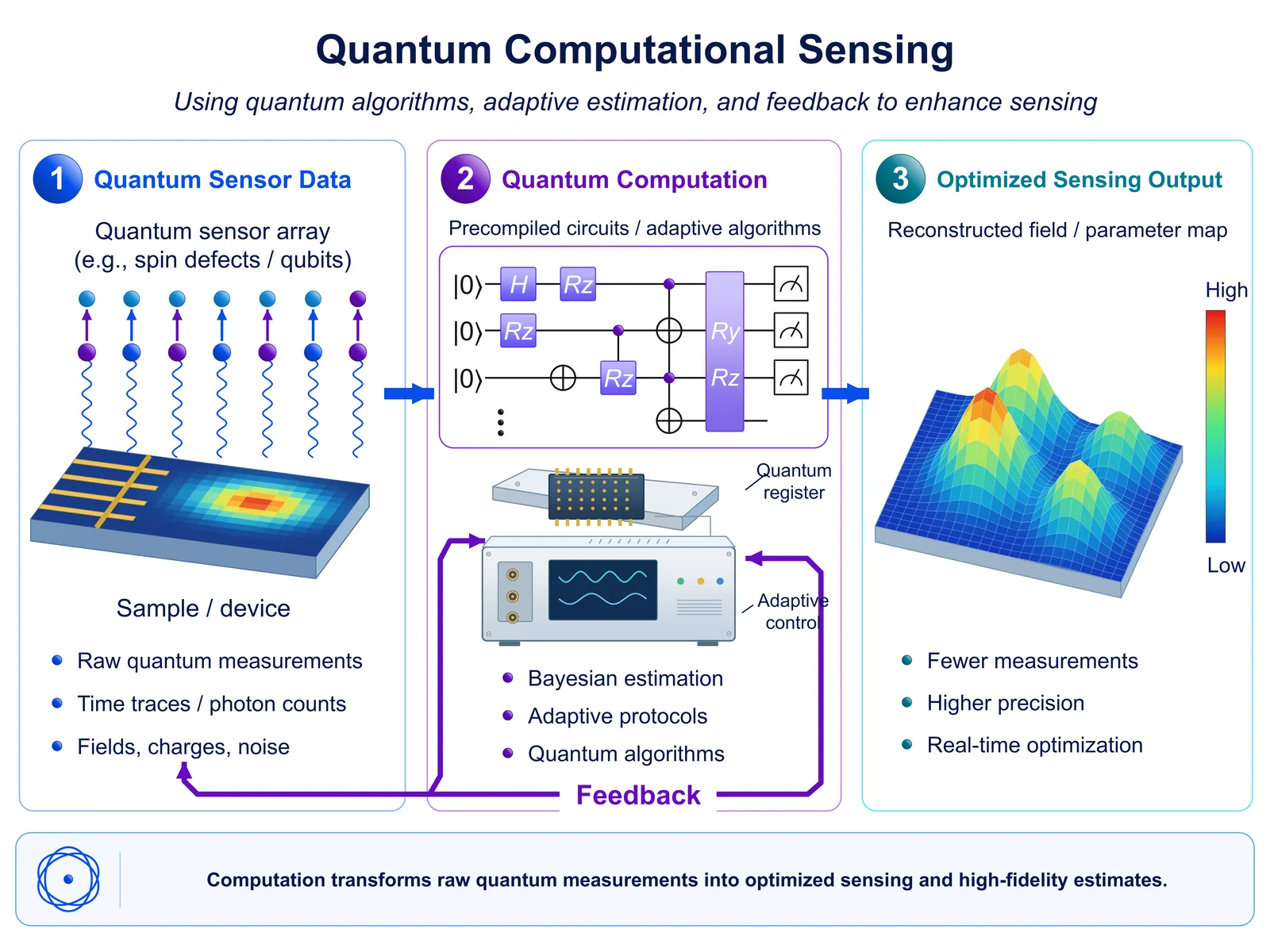
Quantum Computational Sensing
We explore quantum computational sensing approaches that integrate quantum sensors with quantum and classical computation to extract task-relevant information more efficiently from complex measurements. By combining multiplexed sensor arrays with adaptive control, Bayesian estimation, variational protocols, and quantum algorithms, we aim to move beyond conventional sensing followed by post-processing toward measurement strategies that are optimized for the physical quantity of interest. This direction targets improved precision, reduced measurement overhead, and new capabilities for sensing correlated quantum materials, devices, fields, and dynamical processes.
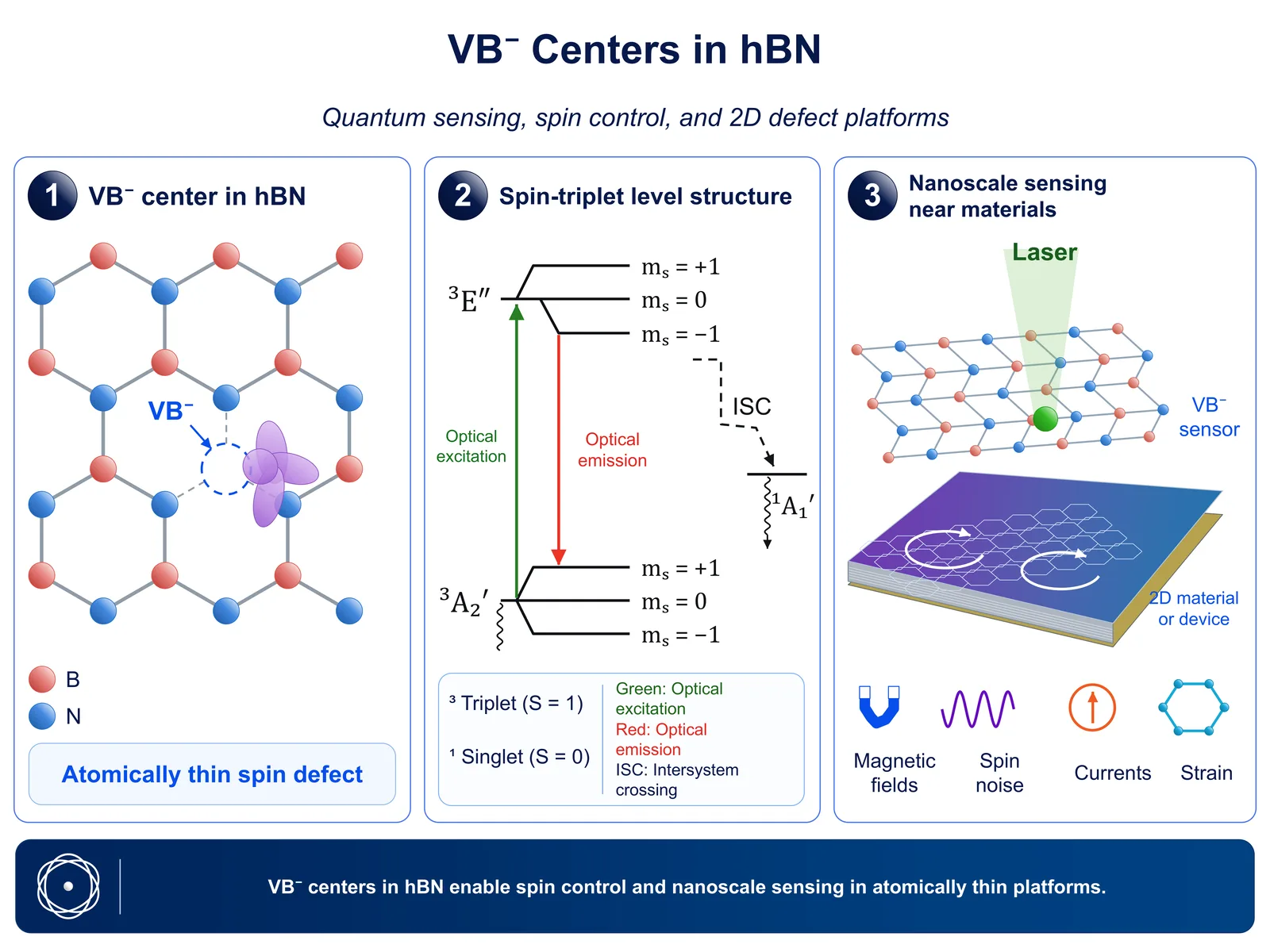
2D Spin Defects in Novel Materials
We develop negatively charged boron vacancies (VB−) in hexagonal boron nitride as atomically thin quantum sensors. Because these spin defects reside in a two-dimensional host, they can be brought extremely close to materials and devices, enabling nanoscale magnetic, electric, strain, and noise spectroscopy. This direction combines optical microscopy, microwave control, defect engineering, and van der Waals materials integration to build chip-compatible quantum sensing platforms.
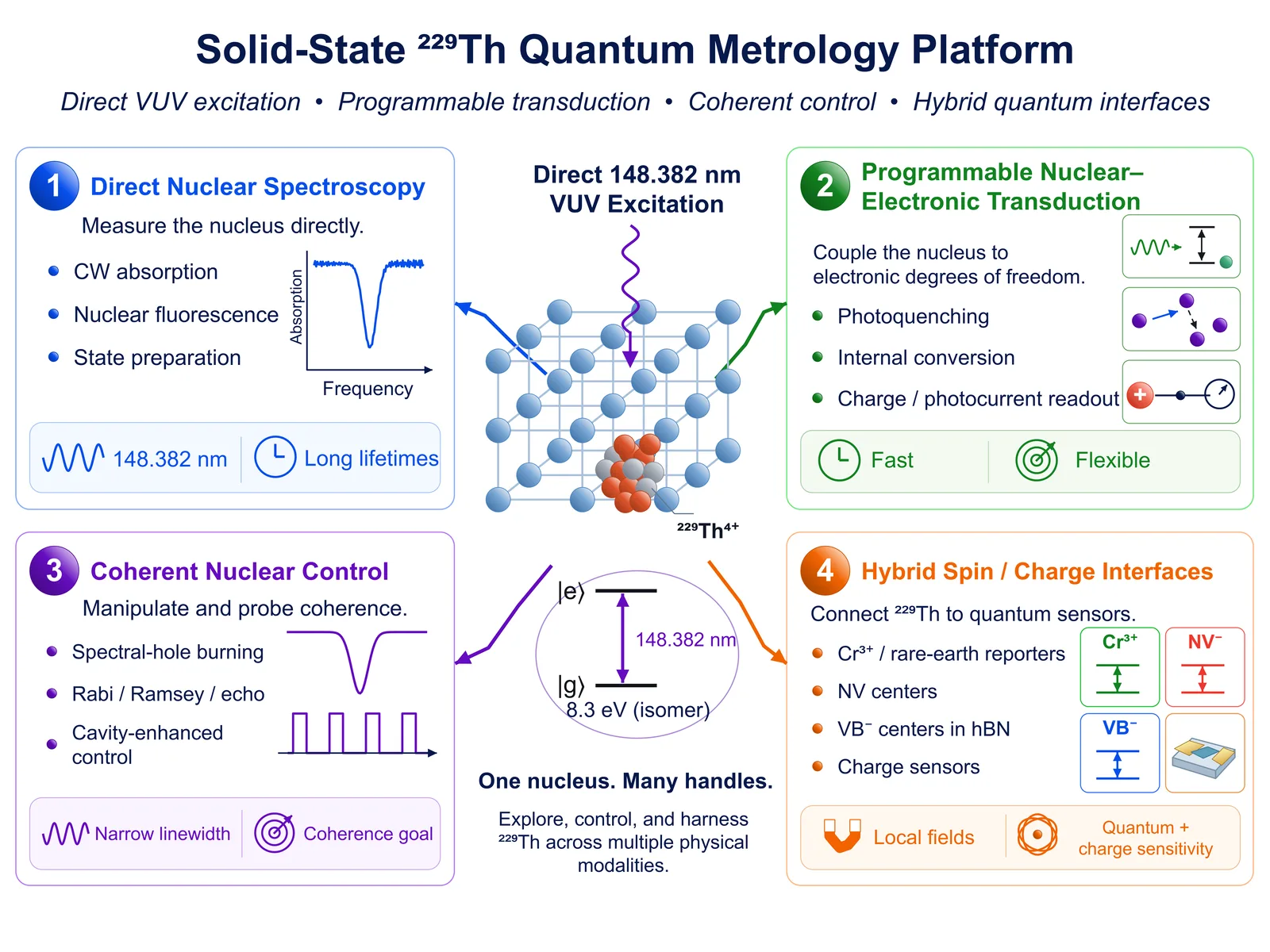
Solid-State Thorium-229 Nuclear Metrology
The unusually low-energy nuclear transition in 229Th provides a compelling platform for precision metrology and nuclear-clock science. We are interested in exploring solid-state approaches that combine direct nuclear spectroscopy with programmable nuclear–electronic transduction, coherent nuclear control, and hybrid spin and charge interfaces. Our goal is to develop new ways to prepare, probe, control, and read out nuclear states while connecting 229Th to solid-state quantum sensors and devices.